
Technology Application: VineVolt tethered long-endurance system + high-precision thermal imaging payload
Project background and customer pain points
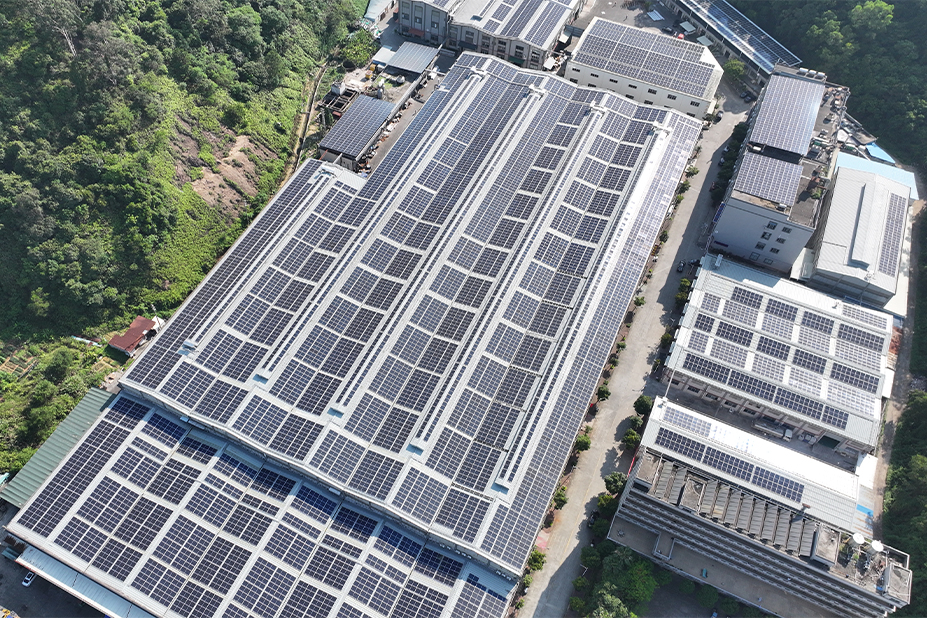
Dalingshan Aoda Aluminum Co., Ltd. actively responded to the call for green manufacturing by constructing a large-scale photovoltaic power generation array on the rooftop of a large factory building. Traditional manual inspection methods face significant challenges in daily operations and maintenance:
- Inefficiency: The factory building is large and the number of photovoltaic panels is numerous, making manual on-site inspections time-consuming and labor-intensive.
- Safety hazards: The complex environment on the factory rooftop presents risks for high-altitude operations, and the photovoltaic panels may carry fault voltages during operation.
- High missed detection rate: Internal defects such as hot spots, junction box failures, diode damage, and hidden cracks in the cell are difficult to detect with the naked eye. These defects can seriously reduce power generation efficiency and even cause fires.
- Downtime losses: Traditional block-by-block power outage inspections can impact the overall power generation revenue of the power plant.
Our Customized Solution
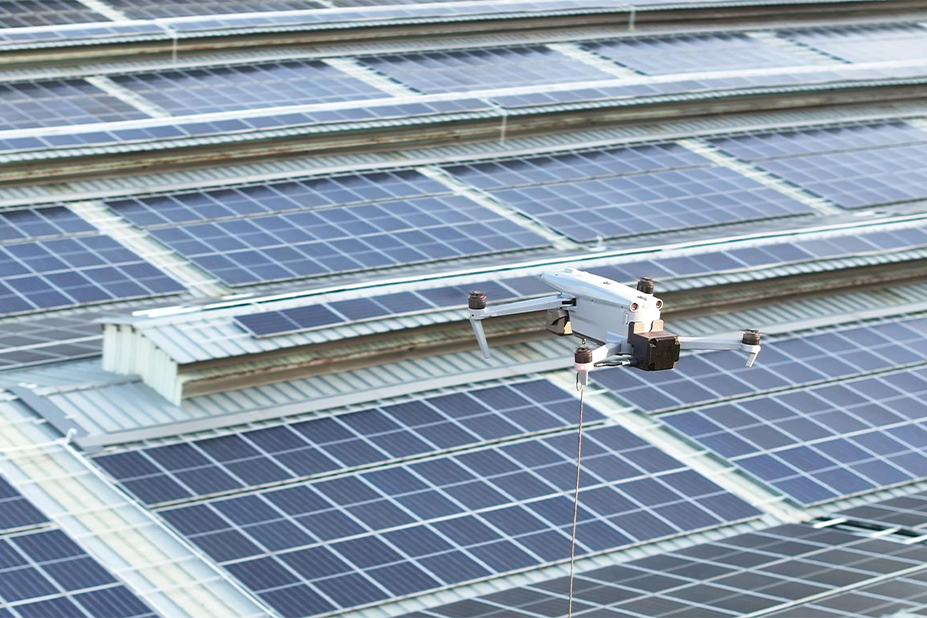
To address Aoda Aluminum’s challenges, we offer a one-stop solution: the VineVolt tethered long-endurance drone + a high-definition thermal imaging camera.
Drone Platform: AutelRobotics EVO MAX 4T (an industry-leading flagship platform, providing stable flight and precise positioning).
Tethering System: The VineVolt tethered power supply system provides continuous power to the drone via a ground power supply unit and specialized cables.
Payload: Equipped with a high-resolution infrared radiometric camera, it accurately measures and records the temperature of each photovoltaic panel, generating a temperature cloud map.
Operation Mode:
The drone is connected to a ground power source via the tethering system, enabling 24-hour uninterrupted hovering operations, completely overcoming battery life limitations.
The RTK module provides centimeter-level positioning accuracy, ensuring that the collected thermal imaging data accurately corresponds to the location of the photovoltaic panels, facilitating precise fault location.
Ground operators monitor the thermal imaging feed in real time via a remote control, quickly identifying and marking abnormally hot spots.
Implementation Process Overview
Preliminary Planning: Utilize drone-generated orthophotos to generate a high-definition map of the factory rooftop and plan an automated inspection route to ensure full coverage and no blind spots.
On-site Deployment: Place the VineVolt tethering system ground unit in a safe area, connect to an industrial power source, and deploy the tethering cable.
Automated Inspection: The drone autonomously flies along a pre-defined route, with its thermal imaging camera collecting data from the photovoltaic panels at a constant speed and distance. The tethering system ensures continuous flight for hours, allowing for a complete inspection with a single takeoff and landing, resulting in extremely high efficiency.
Data Collection: Simultaneously records visible light images, infrared thermal imaging videos and images (supporting temperature data), and GPS location information.
Project Achievements and Value
This inspection provided the customer with an unprecedentedly efficient and accurate O&M experience:
Efficient and Comprehensive: The workload that would have taken 2-3 days for manual inspections was completed in 3 hours, an efficiency improvement of over 800%.
Precise Location: A total of 27 suspected fault points were identified, including 19 hot spots, 5 overheated junction boxes, and 3 abnormal string connections. The report provided a detailed fault list with precise latitude and longitude coordinates and temperature data.
Safe and Economical:
The entire process was contactless and involved no overhead work, ensuring personnel safety.
The inspection was completed while the PV panels were operating normally, eliminating the need for power outages and preventing power loss.
The early detection of potential faults prevented the customer from further losses due to reduced efficiency and potential fires, enabling predictive maintenance.
Data-Based Report: A professional inspection report was submitted, including infrared thermal images, visible light comparison images, a fault location map, and detailed analysis, providing a clear and reliable basis for subsequent repairs.
A representative from Aoda Aluminum said: “Tintec’s tethered drone solution exceeded our expectations. We never imagined we could complete a full plant inspection so quickly. Furthermore, the reports are very intuitive, directly telling our maintenance team where to go and what to repair. This technology has revolutionized our annual operations and maintenance, significantly improving safety and cost-effectiveness.”